
The goalkeeper's career
Being a goalkeeper in PROTA is playing a different game. You won't score goals, but every clean sheet counts, and you have your own awards and your own minigames.
Clean sheets
It is the most important number for a goalkeeper. The game works them out from the games you play and your club's level: an elite club concedes fewer goals, so its keeper adds more clean sheets. At a big club, playing the whole season, you can go past 15.
The goalkeeper's awards
- Golden Glove: 15 clean sheets or more and an average rating of 7.3 or more.
- Best young player in the league: 21 or younger with a rating of 7.4 or more (valid for any position).
- Best player in the league: a rating of 8.2 or more at a level 3 club or higher.
- Ballon d'Or: OVR of 85 or more, a 7.6 rating or more, 1,800 minutes or more, 18 clean sheets and a major trophy (the league, the Champions League or a tournament with your country).
A goalkeeper's Ballon d'Or is one of the hardest achievements in the game. If you manage it, you have done something very special.
Can a goalkeeper score?
Yes, but almost never. A goalkeeper can score at most one goal in his whole career: the classic last-minute header. It happens in fewer than two seasons out of a hundred. If it happens to you, treasure it in your honours.
The goalkeeper's minigames
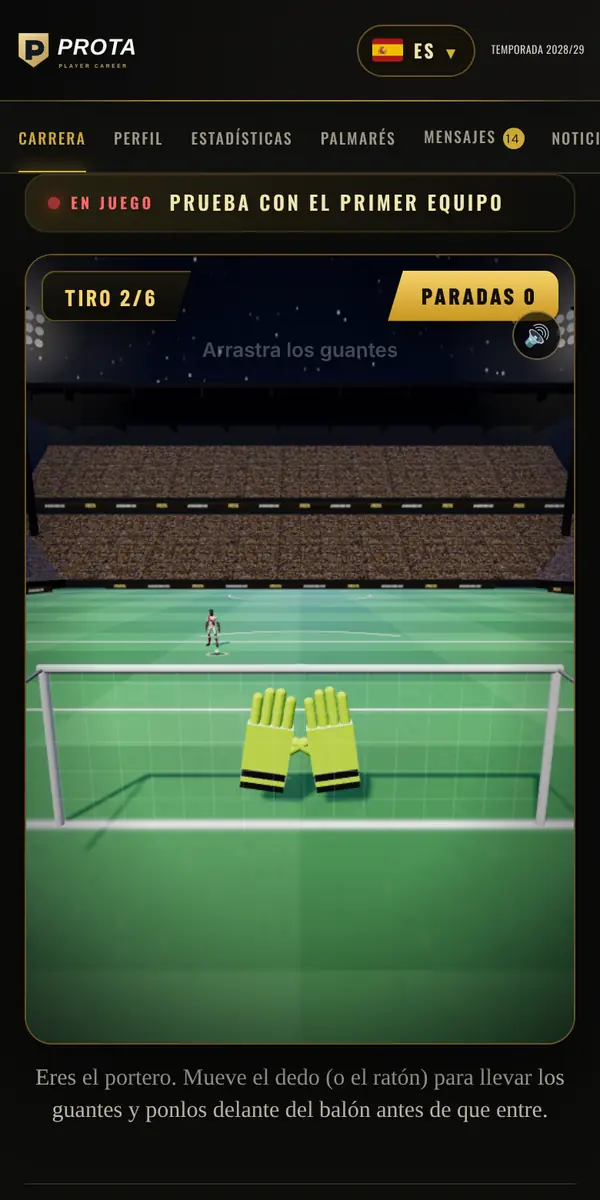
The minigame closest to your day-to-day is the gloves one. It can come up in moments like a relegation battle, a comeback or the first-team trial:
- Goalkeeper hands: you see the goal from inside and drag the gloves across the whole screen to stop the shots. Move your finger to where the ball is going before it arrives.
Tip: don't chase the ball when it is already on you. Watch where the shot comes from and anticipate. A good keeper moves before the ball.
Pros and cons
The goalkeeper's big advantage is consistency: his performance depends a lot on the club, and at a good team the clean sheets come on their own. The downside is that the shop's new boots are useless for him, because they only add goals. For a goalkeeper, the personal nutritionist (half the injury risk), the rest plan (more form and morale) and the trainers are better value.
The national team
To be called up by your country you need to be 18 or older, play at least 1,200 minutes, average a 6.9 rating or more and have a high enough level for your national team. The strongest countries ask for more. All the details are in the national team guide.